

In this article
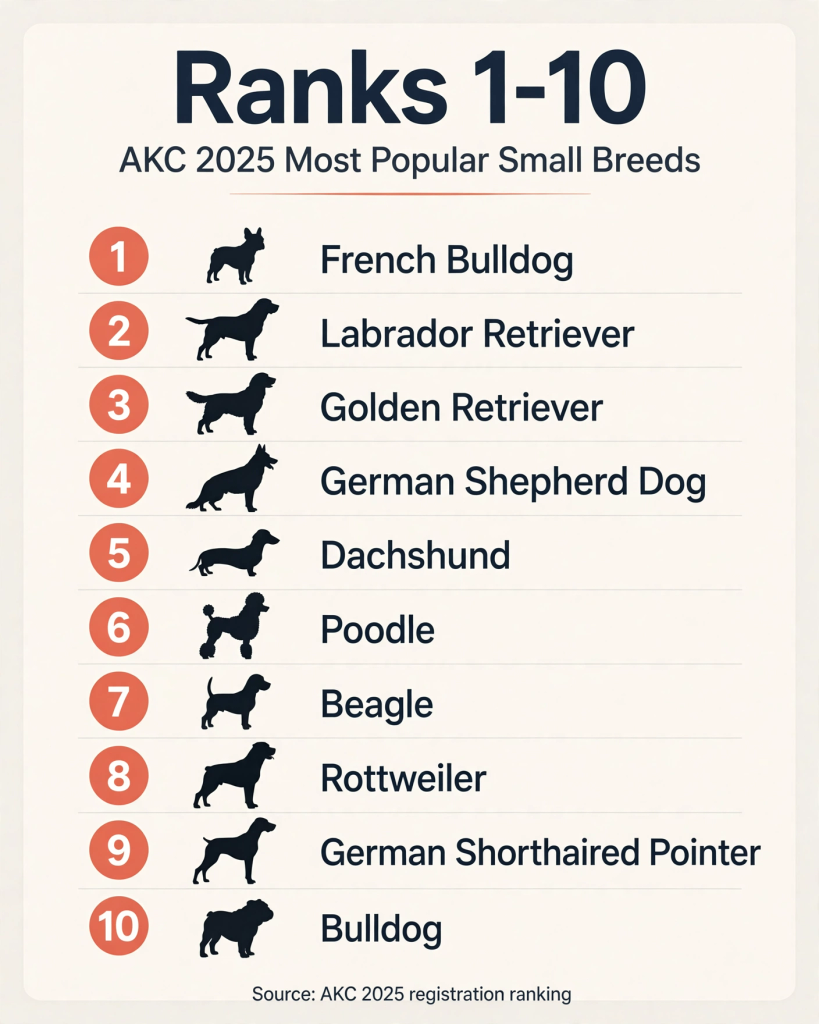
The most popular dog breeds in the United States, according to the American Kennel Club’s 2025 registration rankings (published in 2026), start with the French Bulldog at No. 1, followed by the Labrador Retriever, Golden Retriever, German Shepherd Dog and Dachshund. The rest of the top 10 is the Poodle, Beagle, Rottweiler, German Shorthaired Pointer and Bulldog. That ranking measures AKC registrations in the U.S., so it describes one registry’s records rather than every dog in the world. This guide explains what that means, profiles each of the top 10 popular dog breeds, and shows you how to decide whether any of them actually suits your home.
Table of Contents
What Are the Most Popular Dog Breeds?
The most popular dog breeds are the ones that appear most often in a given dataset, and the dataset you pick changes the answer. This article uses the AKC’s annual ranking because it is the most widely cited list for popular dog breeds in the United States and it is published with a full breed-by-breed table.
The AKC compiles its list from registration statistics. A breed rises when more dogs of that breed are registered with the club, and it falls when others overtake it. That is useful, but it has limits. Plenty of owners never register their dogs, mixed-breed dogs fall outside a purebred registry, and a breed that is common in shelters may rank low on a registration list.
Other ways to measure popularity exist, and each tells a slightly different story:
- Registration counts, as the AKC and other kennel clubs publish them.
- Ownership surveys, which ask households what they live with.
- Pet-population datasets, such as veterinary or insurance records.
- Search interest, which shows curiosity rather than ownership.
- Regional popularity, which can differ sharply between countries and even between cities.
- Shelter and rescue prevalence, which reflects the dogs people give up or adopt, not the dogs they buy.
Because those methods do not always agree, treat any list of popular dog breeds as a snapshot of a particular group of dogs, not a universal verdict.
Which Dog Breed Is the Most Popular Right Now?
The French Bulldog is the most popular dog breed in the AKC’s 2025 registration statistics. It has held the top spot for four years in a row, since it passed the Labrador Retriever in 2022 and ended that breed’s 31-year run at No. 1. The Frenchie was ranked No. 14 in 2012, so its climb took roughly a decade.
Note the timing. The 2025 figures were released in 2026, which makes them the latest full-year AKC ranking available as of November 2026. A 2026 ranking does not exist yet; the AKC will compile it from this year’s registrations. Three breeds recognized in January 2026 (the Russian Tsvetnaya Bolonka, the Teddy Roosevelt Terrier and the Basset Fauve de Bretagne) will first appear in that later list, which brings the AKC’s recognized total to 205 breeds.
Top 10 Popular Dog Breeds (AKC 2025 Ranking)
Below are the ten popular dog breeds at the top of the 2025 AKC list. The rank comes from the AKC. The size, temperament, exercise, grooming and family-fit notes are general breed tendencies. They describe typical dogs, and your individual dog may differ.
1. French Bulldog
- Size: Small, compact and muscular.
- Temperament: Affectionate, playful, often clownish.
- Exercise: Low to moderate. Short walks and play suit most adults.
- Grooming: Short coat that needs little brushing, but facial folds need regular cleaning and drying.
- Trainability: Can be stubborn; short, upbeat, reward-based sessions work best.
- Family fit: Often a good companion for families, with supervision around young children.
- Why it is popular: Its size and easygoing indoor manner suit city and apartment life.
Health note: as a flat-faced (brachycephalic) breed, the Frenchie can have breathing difficulty and struggles in heat. Ask a veterinarian about airway health before you commit.
2. Labrador Retriever
- Size: Medium to large.
- Temperament: Friendly, outgoing, eager to please.
- Exercise: High. Labs need real daily activity and enjoy swimming and fetch.
- Grooming: Short double coat; sheds throughout the year and heavily in seasonal blowouts.
- Trainability: Generally very trainable, driven strongly by food and praise.
- Family fit: A frequent family choice, though adolescent Labs can be boisterous.
- Why it is popular: A long record as a versatile, sociable household and working dog.
Labs love food, so weight management matters throughout life.
3. Golden Retriever
- Size: Medium to large.
- Temperament: Gentle, social, people-oriented.
- Exercise: Moderate to high; retrieving and long walks fit well.
- Grooming: Feathered, water-repellent coat needing regular brushing and plenty of vacuuming.
- Trainability: Typically cooperative and motivated by rewards.
- Family fit: Commonly chosen by families, but needs socialization and supervision like any dog.
- Why it is popular: Its warm, approachable reputation and its work as a guide and service dog.
4. German Shepherd Dog
- Size: Large.
- Temperament: Confident, loyal, alert, with a strong work drive.
- Exercise: High, in both body and mind.
- Grooming: Dense double coat that sheds heavily and needs frequent brushing.
- Trainability: Highly trainable, but early socialization and consistent handling are essential.
- Family fit: Can thrive with an experienced, committed household that provides structure.
- Why it is popular: Versatility in police, service, herding and family roles.
5. Dachshund
- Size: Small (a miniature variety also exists).
- Temperament: Bold, curious, independent.
- Exercise: Moderate; enjoys sniffing walks and digging games.
- Grooming: Depends on the coat. Smooth coats are simple; long and wire coats need more care.
- Trainability: Independent hound mentality means patience and rewards pay off.
- Family fit: Good for many households, with gentle handling by children.
- Why it is popular: A distinctive shape and a big personality in a small body.
Health note: the long back makes spinal problems a concern. Avoid encouraging repeated jumping, and ask a vet about back care.
6. Poodle
- Size: Three sizes: Standard, Miniature and Toy.
- Temperament: Smart, lively, people-focused.
- Exercise: Moderate to high in the Standard; moderate in smaller sizes.
- Grooming: Curly coat that mats without regular brushing and professional clipping.
- Trainability: Often very quick to learn and keen to work.
- Family fit: Size options make the Poodle adaptable to different homes.
- Why it is popular: Intelligence, athleticism and a coat that sheds lightly.
A light-shedding coat is not the same as an allergy-proof one, so spend time with the breed before assuming it will suit an allergic household.
7. Beagle
- Size: Small to medium.
- Temperament: Merry, curious, sociable.
- Exercise: Moderate to high; the nose leads the way.
- Grooming: Short coat; weekly brushing and ear checks.
- Trainability: Food-motivated but easily distracted by scent.
- Family fit: Often good with kids and other dogs when socialized.
- Why it is popular: Compact, cheerful and sturdy.
Expect baying or howling, and keep a secure fence and leash, because a beagle on a scent trail can ignore recall.
8. Rottweiler
- Size: Large and powerful.
- Temperament: Confident, calm when well raised, naturally protective.
- Exercise: Moderate to high, plus mental work.
- Grooming: Short coat with moderate shedding.
- Trainability: Responsive and capable, but strength demands early, reward-based training and socialization.
- Family fit: Can bond deeply with a family that has the experience and time to guide a strong dog.
- Why it is popular: Loyalty and a working heritage as a guardian and drover.
9. German Shorthaired Pointer
- Size: Medium to large.
- Temperament: Eager, energetic, affectionate.
- Exercise: Very high; built for hunting and endurance.
- Grooming: Short coat, low upkeep.
- Trainability: Smart and keen, though exuberant.
- Family fit: Excellent for active families, less so for sedentary ones.
- Why it is popular: An athletic all-purpose hunting breed that also suits outdoor lifestyles.
10. Bulldog
- Size: Medium and stocky.
- Temperament: Calm, gentle, sometimes stubborn.
- Exercise: Low; short walks, cool weather.
- Grooming: Short coat, but facial wrinkles need regular cleaning.
- Trainability: Willing but not always fast; patience helps.
- Family fit: Often a placid household companion, with supervision around children.
- Why it is popular: A mellow temperament and unmistakable look.
Health note: like the French Bulldog, the Bulldog is flat-faced and vulnerable to overheating and breathing trouble.
Full List of Popular Dog Breeds Beyond the Top 10
The AKC ranks 202 breeds in its 2025 table, and the next ten popular dog breeds after the top 10 show how varied demand has become:
| Rank | Breed |
|---|---|
| 11 | Cane Corso |
| 12 | Cavalier King Charles Spaniel |
| 13 | Yorkshire Terrier |
| 14 | Australian Shepherd |
| 15 | Doberman Pinscher |
| 16 | Pembroke Welsh Corgi |
| 17 | Miniature Schnauzer |
| 18 | Boxer |
| 19 | Pomeranian |
| 20 | Bernese Mountain Dog |
The Cane Corso climbed from No. 14 to No. 11 and is close to cracking the top 10. Further down, breeds such as the Shih Tzu (21), Great Dane (22), Boston Terrier (23), Chihuahua (24), Havanese (25) and Border Collie (26) round out the first 26. If you want the entire table, the AKC publishes all 202 ranks.
One caution about reading movement in this list. The AKC itself notes that a breed falling in rank does not necessarily mean fewer people want it; it may only mean others rose faster.
Why Are These Popular Dog Breeds So Popular?
No single factor explains why certain popular dog breeds rise, but several recurring influences stand out.
- Lifestyle fit. Compact, low-exercise breeds like the French Bulldog suit urban living, and the AKC links the Frenchie’s rise to its size and adaptability.
- Temperament reputation. Retrievers have long been associated with friendliness and willingness to learn.
- Working versatility. German Shepherds, Labradors and Goldens work as service, detection and guide dogs, which keeps them visible.
- Appearance. Distinctive looks, such as a Dachshund’s silhouette or a Frenchie’s bat ears, are easy to recognize and share online.
- Availability and history. A breed with many breeders and clubs is simply easier to find.
- Social trends and media. Show wins and online attention can nudge interest; the AKC pointed to the Giant Schnauzer’s recent show success alongside its modest climb.
Popularity also feeds itself. When a breed is everywhere, more people see it, ask about it and decide they want one. That is exactly why it pays to look past trends and examine the dog’s real needs.
Most Popular Family Dog Breeds
Several popular dog breeds are regularly recommended for households with children, but no breed is automatically safe or gentle. The Golden Retriever, Labrador Retriever, Beagle, Cavalier King Charles Spaniel and Poodle often appear on family shortlists for their sociable temperaments.
What matters more than the breed label is how the dog is raised and managed:
- Supervision. Never leave a young child alone with any dog.
- Socialization. Positive, gradual exposure to people, places and sounds, especially during puppyhood.
- Training. Reward-based training helps every dog learn household manners.
- Individual temperament. Meet the specific dog, and for puppies meet the parents if possible.
- Teaching children. Show kids to pet gently, avoid hugging or disturbing a dog that is eating or sleeping, and let the dog walk away.
Energy also counts. A bouncy young Lab can knock over a toddler without any ill intent, while a quieter dog may suit a calmer home. If you want help matching a breed to a child’s age, ask your veterinarian or a qualified trainer.
Most Popular Small Dog Breeds
Small dogs feature heavily among popular dog breeds on the AKC list, including the French Bulldog, Dachshund, Yorkshire Terrier, Miniature Schnauzer, Pomeranian, Shih Tzu, Boston Terrier, Chihuahua and Havanese. They differ more than people expect:
- French Bulldog: easygoing indoors, but heat-sensitive and prone to breathing trouble.
- Dachshund: lively and vocal, with a vulnerable back.
- Yorkshire Terrier: feisty and alert; the silky coat needs regular brushing or trimming.
- Miniature Schnauzer: spirited, trainable and a regular groomer’s client for its wiry coat.
- Pomeranian: fluffy and bright, needs frequent brushing and can be noisy.
- Havanese: social and affectionate, with a long coat that requires upkeep.
Size does not equal low exercise. A terrier or a small herding-type dog may be bursting with energy, and every small dog still needs daily walks, mental stimulation and training. Many also need dental attention, as small mouths crowd teeth. Apartment suitability depends on barking and energy as much as weight.
Most Popular Large Dog Breeds
Large breeds in the AKC’s top 20 include the Labrador Retriever, Golden Retriever, German Shepherd Dog, Rottweiler, German Shorthaired Pointer, Cane Corso, Doberman Pinscher, Boxer and Bernese Mountain Dog, with the Great Dane right behind at No. 22. Expect these popular dog breeds to bring practical demands:
- Space and exercise. More room helps, but a committed owner can meet a large dog’s needs in a modest home if exercise is reliable.
- Training. A strong dog that pulls or jumps is a handling problem; start early and stay consistent.
- Cost. Food, medication, boarding and equipment generally cost more as size increases.
- Grooming. Heavy shedders such as Shepherds and Labs mean regular brushing.
- Health. Large and giant breeds can face joint and growth concerns, so follow your veterinarian’s advice on diet and puppy activity.
- Lifespan. Giant breeds often have shorter lives than small ones, which owners should consider emotionally.
Do not assume a large dog cannot live in an apartment. A calm adult Great Dane may do better indoors than a restless small terrier. Always judge the individual dog and its routine.
Popular Dog Breeds for First-Time Owners
No breed is effortless, and any dog needs training, exercise, veterinary care and time. Still, some popular dog breeds are comparatively forgiving for many beginners: the Labrador Retriever, Golden Retriever, Poodle, Cavalier King Charles Spaniel and Havanese are often suggested because they tend to be social and receptive to training.
Even then, consider the catches:
- A Lab or Golden needs substantial daily exercise and can be mouthy and exuberant as a youngster.
- A Poodle or Havanese needs a grooming plan and a budget for it.
- A Cavalier can have heart and other health concerns that deserve research.
- A hound like the Beagle or Dachshund may test patience with independence.
Rather than asking which breed is perfect for beginners, ask which demands you can meet consistently for a decade or more. If your schedule is packed, a lower-energy adult from a shelter may suit you better than a high-drive puppy of any popular breed. A beginner-friendly puppy class is worth the investment once you choose.
Popular Dog Breeds That Are Easy to Train
Easy to train is not the same as smart. Trainability reflects several separate traits:
- Intelligence: problem-solving ability.
- Motivation: whether food, toys or praise matter to the dog.
- Responsiveness: how quickly the dog tunes in to a handler.
- Independence: some breeds were bred to work without instruction.
- Willingness to work: drive and focus around distractions.
Using those lenses, Poodles, German Shepherds, Golden Retrievers and Labradors usually learn quickly because they combine ability with a desire to cooperate. Dachshunds, Beagles and many other hounds are clever, but they were developed to follow scent or pursue game on their own, so their independence can read as stubbornness. Bulldogs and French Bulldogs may be willing but slower, and they may tire quickly.
Whatever the breed, reward-based methods, short sessions and consistency work best. For serious behavior concerns such as aggression, extreme fear or separation distress, consult a veterinarian and a qualified behavior professional rather than relying on breed reputation.
Popular Dog Breeds for Apartments
Apartment suitability depends on much more than height and weight. Weigh these factors:
- Exercise needs: can you reliably provide them every day, in all weather?
- Barking: thin walls make a vocal dog a problem for neighbors.
- Energy level: high-drive dogs can become destructive without outlets.
- Mental stimulation: puzzle toys, training and scent games count.
- Ability to settle: some dogs relax indoors; others pace.
- Access to outdoors: elevators, stairs and nearby green space affect routines.
By these measures, the French Bulldog, Bulldog, Cavalier King Charles Spaniel, Havanese and Shih Tzu are often discussed as apartment-adaptable, while the Beagle’s howling or a terrier’s alertness may cause friction. Large breeds such as the Great Dane are sometimes calm indoors. The right answer among popular dog breeds depends on you and the individual dog.
Popular Active Dog Breeds
If you run, hike or play dog sports, look at popular dog breeds built for stamina: the German Shorthaired Pointer, Australian Shepherd, Border Collie, Labrador Retriever, Golden Retriever, Standard Poodle and Siberian Husky are examples from the AKC’s top 30.
Active breeds need more than exercise. They need jobs: fetch, scent work, agility, obedience or herding-style games. A tired body with a bored brain can still cause trouble.
Be careful with puppies. Growing joints should not be pushed into repetitive, high-impact exercise, and the right amount depends on breed and age. Ask your veterinarian before starting a running routine with a young dog. Flat-faced and heavy-coated dogs also need extra caution in heat.
Popular Low-Grooming Dog Breeds
Low-grooming does not mean no grooming. Every dog benefits from nail trims, dental care, ear checks and a clean, comfortable coat. Coat type is the big variable:
- Short, smooth coats (Boxer, Beagle, German Shorthaired Pointer, Doberman) usually need quick weekly brushing, though many still shed.
- Double coats (Labrador, German Shepherd, Golden) need regular brushing and heavy seasonal cleanup.
- Curly or long coats (Poodle, Havanese, Yorkshire Terrier) shed little but need frequent brushing and often professional grooming.
- Wrinkled faces (French Bulldog, Bulldog) need skin-fold cleaning.
Be wary of any claim that a breed is hypoallergenic. Allergens come from dander, saliva and other sources, not only hair, and individual dogs vary, so spend time with a specific dog before deciding.
Popular Dog Breeds With Different Temperaments
Breeds hint at tendencies, never guarantees. A rough sorting of popular dog breeds by general temperament:
- Affectionate: Cavalier King Charles Spaniel, Golden Retriever, French Bulldog.
- Independent: Dachshund, Beagle, Shiba Inu.
- Energetic: German Shorthaired Pointer, Australian Shepherd, Border Collie.
- Calm: Bulldog, Great Dane, Bernese Mountain Dog.
- Protective: Rottweiler, Doberman Pinscher, German Shepherd Dog, Cane Corso.
- Social: Labrador Retriever, Boxer, Poodle.
- Reserved with strangers: many guardian types without early socialization.
Upbringing, training, health and each dog’s own personality all push in different directions. Treat these categories as starting points for questions, not predictions.
Popular Dog Breeds Comparison Table
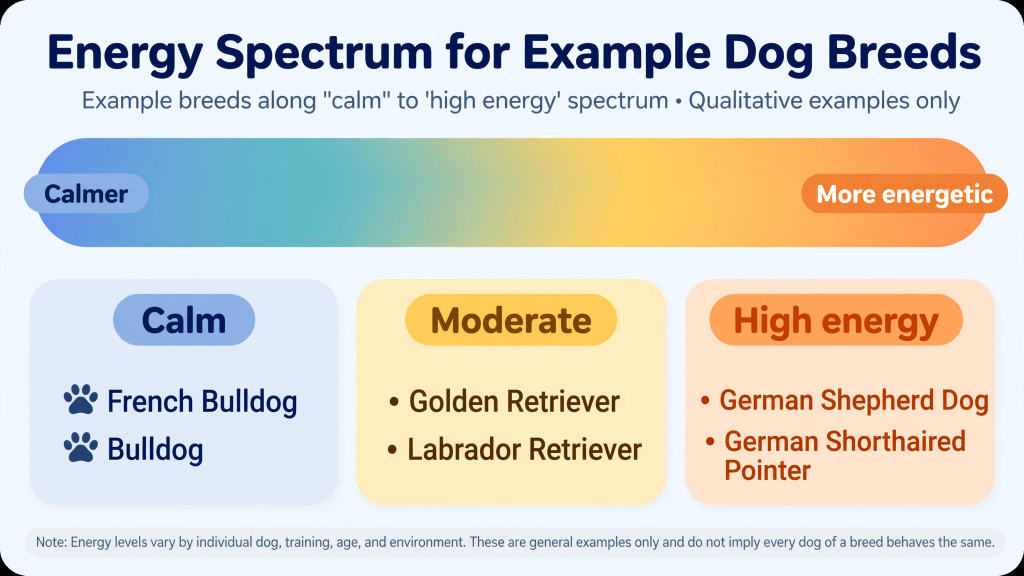
This table summarizes broad, qualitative tendencies for the top 10 popular dog breeds. It uses general descriptors rather than numerical scores, because there is no reliable single scoring system.
| Breed | Size | Energy | Grooming | Trainability | Family Fit |
|---|---|---|---|---|---|
| French Bulldog | Small | Low–moderate | Low (fold care) | Moderate | Often good; supervise |
| Labrador Retriever | Medium–large | High | Moderate (sheds) | High | Often good; exuberant |
| Golden Retriever | Medium–large | Moderate–high | Moderate–high | High | Often good |
| German Shepherd Dog | Large | High | Moderate–high | High | Good with structure |
| Dachshund | Small | Moderate | Varies by coat | Moderate | Good; gentle handling |
| Poodle | Toy to large | Moderate–high | High (clipping) | High | Good; size flexible |
| Beagle | Small–medium | Moderate–high | Low | Moderate | Often good |
| Rottweiler | Large | Moderate–high | Low–moderate | High with training | Needs experienced owner |
| German Shorthaired Pointer | Medium–large | Very high | Low | High | Great for active homes |
| Bulldog | Medium | Low | Low (fold care) | Moderate | Often good; supervise |
How to Choose Among Popular Dog Breeds
Choosing among popular dog breeds works best as a checklist you complete before you fall for a face.
- Home size: do you have space, stairs, a yard, thin walls?
- Daily schedule: who is home, and for how many hours?
- Exercise availability: can you guarantee daily activity year-round?
- Grooming budget: brushing time and professional appointments add up.
- Training experience: be realistic about your skills and willingness to learn.
- Children: ages, activity levels and supervision plans.
- Other pets: existing dogs, cats or small animals.
- Shedding tolerance: fur on clothes and furniture, or allergies.
- Climate: flat-faced and heavy-coated dogs struggle in heat.
- Breed-specific health considerations: research common conditions and costs.
- Adoption versus a responsible breeder: both can be legitimate paths.
- Long-term financial commitment: food, vet care, insurance, boarding and emergencies.
Score yourself honestly. The most popular breed is not automatically the right match for your household, and a lesser-known breed or a mixed-breed dog may fit better. The AKC also offers a tool for comparing breeds side by side if you want another view.
Popularity Does Not Mean Best
Popularity is not a quality score. It records demand, not health, temperament or suitability. Several truths follow:
- A breed can be common precisely because it is fashionable, and fashion does not equal fit.
- Popular dog breeds can carry heavy care requirements, from daily exercise to professional grooming.
- Some have well-documented health challenges, including breathing problems in flat-faced breeds and joint issues in large ones.
- Temperament varies within every breed.
- High demand can encourage careless breeding and puppy sales that put profit ahead of animal welfare.
None of this is a judgment of owners. Many people love and care for dogs from the most fashionable breeds and give them excellent lives. It is simply a reminder to research first and buy or adopt thoughtfully.
How to Choose a Healthy Dog From a Popular Breed
How you find a dog matters as much as which breed you pick.
If you go to a breeder, look for someone who:
- Performs breed-appropriate health testing and shares the results.
- Lets you see the puppy’s parents or explains why you cannot.
- Provides veterinary records, vaccination history and a clear written contract.
- Raises puppies in a clean, social home environment with early socialization.
- Answers hard questions openly and asks you plenty in return.
- Will take a dog back if circumstances change.
Avoid sellers who pressure you, offer many breeds at once, will not let you visit, or ship puppies unseen.
If you adopt, a shelter or rescue can introduce you to adult dogs whose personalities are already visible. Ask about medical records, behavior observations, history with children or other animals, and whether the group offers post-adoption support. Many popular dog breeds and their mixes appear in shelters, so adoption is a perfectly legitimate route.
Either way, schedule a veterinary checkup soon after the dog comes home for routine guidance.
Popular Dog Breeds and Health Considerations
Every breed has potential health risks, and no breed is guaranteed healthy. Mixed-breed and purebred dogs can both develop health problems. Preventive veterinary care, a healthy weight, dental care and vaccinations matter for all of them, and responsible breeding with health testing can reduce some inherited risks.
Examples that owners often hear about, without implying that any individual dog will be affected:
- Flat-faced breeds (French Bulldog, Bulldog, Boxer): airway, skin-fold and heat concerns.
- Dachshunds: spinal disc disease linked to their long backs.
- Large and giant breeds (Labrador, Golden, German Shepherd, Rottweiler, Great Dane, Bernese Mountain Dog): joint and orthopedic concerns, along with other conditions that vary by breed.
- Cavalier King Charles Spaniels: certain heart conditions that breeders and vets screen for.
- Retrievers and beagles: a strong tendency toward weight gain, which stresses joints and organs.
For specific screening recommendations, ask your veterinarian and consult the national breed club for the breed you are considering. This article cannot diagnose any dog or replace a veterinary exam.

Frequently Asked Questions About Popular Dog Breeds
What is the most popular dog breed?
In the AKC’s 2025 registration rankings, the French Bulldog is the most popular dog breed in the United States, holding No. 1 for the fourth consecutive year. Other registries and countries can produce different results.
What are the top 10 popular dog breeds?
The AKC’s 2025 top 10 is the French Bulldog, Labrador Retriever, Golden Retriever, German Shepherd Dog, Dachshund, Poodle, Beagle, Rottweiler, German Shorthaired Pointer and Bulldog, in that order.
What are the most popular family dog breeds?
Golden Retrievers, Labrador Retrievers, Poodles, Beagles and Cavalier King Charles Spaniels are commonly suggested for families. Individual temperament, training, socialization and supervision matter more than breed.
What are the most popular small dog breeds?
Among the AKC’s most popular dog breeds, small ones include the French Bulldog, Dachshund, Yorkshire Terrier, Miniature Schnauzer, Pomeranian, Shih Tzu, Boston Terrier, Chihuahua and Havanese.
What are the most popular large dog breeds?
Large favorites include the Labrador Retriever, Golden Retriever, German Shepherd Dog, Rottweiler, German Shorthaired Pointer, Cane Corso, Doberman Pinscher, Boxer, Bernese Mountain Dog and Great Dane.
What are the best popular dog breeds for first-time owners?
No breed is effortless. Labradors, Goldens, Poodles, Cavaliers and Havanese are often recommended because many are social and trainable, but each needs exercise, grooming or health awareness. Choose based on your schedule and experience.
Are popular dog breeds easier to find?
Often yes, since more breeders and rescues handle them, but high demand can also mean long waitlists, higher prices and more unscrupulous sellers. Vet breeders carefully, or consider adoption.
Does the most popular dog breed mean it is the best?
No. A ranking reflects how many dogs were registered, not temperament, health or fit for your lifestyle. The best breed is the one whose needs match what you can provide.
How are popular dog breeds ranked?
The AKC ranks breeds by the number of dogs registered with the club in a given year. That reflects AKC-registered, purebred dogs in the United States only, so it does not cover unregistered dogs, mixed breeds or other countries.
Which popular dog breed is best for an apartment?
It depends on the dog. French Bulldogs, Bulldogs, Cavaliers, Havanese and Shih Tzus are often considered adaptable, but barking, energy and your ability to provide daily exercise matter more than size.
Conclusion
The AKC’s 2025 ranking, published in 2026, puts the French Bulldog first, followed by the Labrador Retriever, Golden Retriever, German Shepherd Dog and Dachshund, with the Cane Corso just outside the top 10. Those popular dog breeds rose for different reasons: lifestyle fit, temperament reputation, working versatility and distinctive looks. But a registration ranking measures demand in one registry, not quality, and every breed on it brings real needs in exercise, grooming, training and health care. Use the checklist above, spend time with real dogs, consider adoption as seriously as buying, and choose the dog that fits your life rather than the one with the highest rank.
Sources & References
- American Kennel Club. “The Most Popular Dog Breeds of 2025: French Bulldog Holds Top Spot.” AKC.org (page updated August 11, 2026). https://www.akc.org/expert-advice/dog-breeds/most-popular-dog-breeds-2025/ — source for the ranking, the 202-breed count, breed movements and new-breed recognitions.
- American Kennel Club. “Dog Breeds.” AKC.org. https://www.akc.org/dog-breeds/ — breed profile hub.
- American Kennel Club. “Compare Breeds.” AKC.org. https://www.akc.org/compare-breeds/ — side-by-side breed comparison tool.

 admin